Friday, March 11, 2011

Nose Cancer More Condition_symptoms

Padre Pio - At the door of heaven - Thirty appointment

Back an appointment with an original biography that portrays "the history of Padre Pio told his friends:" On the Threshold of Paradise "by Saverio Gaeta. Today we discover the devotions in Padre Pio, and we see His loving care in teaching every spiritual devotion to the children, in addition, we also see the incredible love of the friar from Pietrelcina for the Vicar of Christ:

XII
Novenas and Devotions

Three required to Madonna

In the pages of Journal of July 1929, Padre Pio listed the daily devotions that had undertaken to practice: "Not less than four hours of meditation, and those on the ordinary life of our Lord's birth, passion and death. Novenas: Our Lady of Pompeii, St. Joseph, St. Michael, St. Anthony, the father St. Francis, the Sacred Heart of Jesus, Saint Rita, Saint Teresa of Jesus. "

long as his strength allowed, the superiors he had reserved for the evening services of the Visit to the Blessed Sacrament and Eucharistic Benediction. It was a moment dear to her spiritual children, that Padre Pio also proposed other penitents with these words: "Jesus awaits you a prisoner in case ... is' \u200b\u200bto find him and let him company. " Also on Friday evening, while the other brothers went to dinner, he went to church and held the devotion of the Via Crucis.

In Pompeii, where he is venerated the Virgin of the Rosary, so dear to him, Padre Pio went three times: in 1901, with some friends at school, in November 1911, parent company of the Evangelist, Superior of the convent Venafro, the January 3, 1917, on a permit from military service. EA by novenas to Our Lady of Pompei, Father Pio cried the most because he cared about, including three solo, only two of which were answered.

First, the return to the convent, during his long illness in Pietrelcina, "God and the dear Mother of Pompeii, which have occurred at the novenas novenas, now there are more than three years, they know that what I did to be heard by a test yes. They only understand and witness the pain that shakes my heart and that oppresses me, "he wrote January 24, 1915 to Father Benedict. Then the exemption from military service, for soliciting the cooperation of Father Augustine

"I come to ask you, father, a favor that would be me you used the charity to begin as soon as the three novenas to Our Lady of Pompeii the daily recitation, during this period, dell'intiero Rosario. "

not listen to the request received instead of dying at a young age, as he confided to a colleague in 1960: "I played for 35 years, the novena Our Lady of Pompeii, asking for the grace to take me with him in Paradise. But then I stopped. " And the brother who expressed surprise at the fact that he had stopped praying, he who so loved the Virgin, said: "My son, I asked Our Lady for the grace to let me die, but did not listen. And when a mother who does not listen there is not nothing more to do. "

Another Marian devotion every night practice was the recitation of the Visit to the Blessed Virgin Mary, composed by St. Alphonsus Maria de 'Liguori: "Most Holy and Immaculate Virgin Mother Mary, you who are the mother of my Lord, Queen of the world, the Advocate, the Hope, Refuge of sinners, have recourse Today I, who am the most miserable of all. I worship you, O great Queen, and thank you for all the graces I have done so far, especially for having delivered me from hell, which I have so often deserved. " At these last words his voice cracked ever to tears, prompting the emotion the faithful in the church.

contemplating Mary, Padre Pio thought immediately turned to her husband, St. Joseph, whom he tenderly venerated for his sweet presence next to the Christ Child. The brothers saw him often remain ecstatic before the painting of the saint, who was hung in the verandah on the first floor. Once, his father called from Onorato to hurry to get to church, he replied: "How è bello san Giuseppe, lasciatemi stare qui ancora un poco...».

Tutti i figli spirituali venivano catechizzati a compiere bene le loro devozioni, che scandivano l'intero anno. Un quadro completo ce l'offre la testimonianza della signorina Rachelina Russo:

«Una delle devozioni che ci inculcava era quella all'angelo custode, perché è il nostro compagno indivisibile, colui che ci è sempre vicino dalla nascita alla morte. Un'altra delle devozioni maggiormente raccomandate era quella del mese di san Giuseppe, che tutti gli anni, sia in chiesa che in privato a casa, non mancavamo mai di praticare. E poi il mese di maggio, con novena e supplica alla Vergine di Pompei; il mese di giugno, con la coroncina al Sacro Cuore tutti i giorni; la devozione alla Madonna del Carmine, a sant'Anna, all'Assunta, la Quaresima di san Michele che comincia la vigilia dell'Assunta e finisce il 28 settembre; il mese di ottobre dedicato alla Vergine del Rosario e agli angeli custodi; il mese dei morti, e infine tutte le devozioni del mese di dicembre, dall'Immacolata sino al Natale e all'Epifania, con la recita delle 40 Ave Maria che cominciano il giorno di santa Caterina».

Anche l'amore alla Chiesa era intenso in Padre Pio e si incarnava nella devozione al Vicario di Cristo, in favore del quale elevava ogni mattina la sua prima preghiera. Durante la notte voleva che nella sua stanza fosse sempre illuminata - insieme con il quadro della Madonna della Libera, patron saint of Pietrelcina, and photographs of the parents - the image of the Pope

Father Tarcisio Zullo, during the Marian Year of 1954, joked: "Spiritual Father, if you were there St. Peter's Square and the Pope, I would curious to see if people - seeing you take two different routes - running over the back of the Pope or Father Pio ...». He said, "they should all be behind the Pope, because the first running back to the Vicar of Christ would be Padre Pio." And when the Pope's trip, which he normally did not care about the news Funicelli Pellegrino asked his father if he had listened to the radio news program, fearing some danger for the Pope, which he regarded as a family member.

In particular, he most loved Pope was Pius XII, who, moreover, did not hide his opinion: "Padre Pio is a saint, but we can not say, if no canonized him alive," he confided to journalist John Gigliozzi . At the beginning of the serious illness of 1954, the sister of Pope Pacelli asked Padre Pio, the Capuchin Superior through, "to formulate a prayer to the Supreme Pastor of the Church and the Church itself."

Padre Pio answered the call immediately:

"Of her who is the sister of the Holy Father, we understand the torment, but the agony of children below that you would not believe her sister. I offered my all to the Lord and my offer more ... Please, immoliamoci and trust. " Needless to say, as revealed in the press of the time Father Virginio Rotondi, the miraculous healing took place immediately!

Thursday, March 10, 2011

Poem Baby Shower Money Tree

General Audience Pope Benedict XVI - March 9, 2011 Ash Wednesday


BENEDICT XVI GENERAL AUDIENCE


Paul VI Audience Hall Wednesday, March 9, 2011


Ash Wednesday

Dear brothers and sisters,

today, marked by the austere symbol of ashes, we enter the Season of Lent, beginning a spiritual journey that prepares us to celebrate the Easter mysteries. The blessed ashes on our head tax is a sign that reminds us of our condition as creatures, invites us to repentance and conversion to step up efforts to follow the Lord more and more.

Lent is a journey, that rises to accompany Jesus to Jerusalem, site of the fulfillment of the mystery of his passion, death and resurrection reminds us that the Christian life is a "way" to go, consisting not so much a law observe, but in the person of Christ, to meet, to be accepted, to be followed. Jesus, in fact, tells us: "If anyone would come after me, let him deny himself and take up his cross daily and follow me" (Lk 9:23). It tells us, that is, that to come with him to the light and joy of the resurrection, the victory of life, love and goodness, that we ought to take up the cross each day, as calls us a nice page of the Imitation of Christ: "Take, then, your cross and follow Jesus, so you will enter into eternal life. We preceded himself, carrying his cross (Jn 19:17) and died for you, so that you to bring your cross and I wanted to be crucified too. In fact, if you die with him, with him and like him live. If you have been companion in suffering, you will be a companion in glory "(L. 2, c. 12, n. 2). In the Mass of the First Sunday of Lent we will pray: "O God our Father, with the celebration of this Lent, the sacramental sign of our conversion, grant to your faithful to grow in knowledge of the mystery of Christ and to bear witness to a worthy way of life "(Prayer). E 'invocation that turn to God because we know that only He can change our heart. And it is especially in the liturgy, participation in the sacred mysteries, we are led to take this journey with the Lord, is a teaching from Jesus, to retrace the events that have brought salvation, but not as a simple commemoration, a remembrance of past events. In liturgical celebrations, Christ is made present through the Holy Spirit, those saving events become current. There is a key word that occurs frequently in the liturgy to indicate this: the word "today" and it must be understood in the original sense and practical, not metaphorical. Today, God reveals His law and has given us today to choose between good and evil, between life and death (cf. Deut 30:19) and today "the kingdom of God is near. Repent and believe the Gospel "(Mk 1:15); today that Jesus Christ died on Calvary and rose from the dead and ascended into heaven and is seated at the right the Father, today we are given the Holy Spirit today is a favorable time. Participating in the Liturgy, then, means immerse their lives in the mystery of Christ, in his permanent presence, take a journey in which we enter into His death and resurrection to have life.

On Sundays of Lent, in a special way this year liturgical cycle A, we are introduced to live a baptismal journey, as if to retrace the journey of the catechumens, those preparing to receive Baptism, to revive in and to us this gift so that our life recovery needs and commitments of this sacrament, which is the basis of our Christian life. In the message I sent to this Quaresima, ho voluto richiamare il nesso particolare che lega il Tempo quaresimale al Battesimo. Da sempre la Chiesa associa la Veglia Pasquale alla celebrazione del Battesimo, passo per passo: in esso si realizza quel grande mistero per cui l’uomo, morto al peccato, è reso partecipe della vita nuova in Cristo Risorto e riceve lo Spirito di Dio che ha risuscitato Gesù dai morti (cfr Rm 8,11). Le Letture che ascolteremo nelle prossime domeniche e alle quali vi invito a prestare speciale attenzione, sono riprese proprio dalla tradizione antica, che accompagnava il catecumeno nella scoperta del Battesimo: sono il grande annuncio di ciò che Dio opera in questo Sacramento, una stupenda catechesi battesimale rivolta a ciascuno di noi. La Prima Domenica, Sunday call of temptation, because it presents the temptations of Jesus in the desert, invites us to renew our final decision to God and to courageously face the fight ahead to stay faithful. There is always a need for this new decision, to resist evil, to follow Jesus in the Church this Sunday, after hearing the testimony of godparents and catechists, celebrates the election of those who are admitted to the Easter Sacraments. The Second Sunday is that of Abraham and the Transfiguration. Baptism is the sacrament of faith and of divine, like Abraham, the father of believers, we too are invited to leave, to go out from our land, to leave the security that we built to put our trust in God, the goal can be seen in the transfiguration of Christ, the beloved Son, in whom we become "sons of God." Is presented in the following Sunday Baptism in the images of water, light and life. The Third Sunday lets us meet the Samaritan woman (cf. Jn 4.5 to 42). Like Israel in the Exodus, we have received in Baptism that saves water, Jesus tells the Samaritan woman as he water of life, extinguishing every thirst, and this water is its own spirit. The Church celebrates this Sunday in the first round of the catechumens during the week and gives them the Symbol: The Profession of Faith, I think. The Fourth Sunday makes us reflect on the experience of "blind man" (cf. Jn 9.1 to 41). In Baptism we are freed from the darkness of evil and receive the light of Christ to live as children of light. We too must learn to see the presence of God in the face of Christ and thus the light. In the journey of the catechumens is celebrated on the second ballot. Finally, the Fifth Sunday presents the resurrection of Lazarus (cf. Jn 11.1 to 45). In Baptism we have passed from death to life and we are enabled to please God, to kill the old man to live by the Spirit of the Risen One. For catechumens is celebrated on the third ballot lasted a week and is delivered to them the Lord's Prayer: Our Father. "

Questo itinerario della Quaresima che siamo invitati a percorre nella Quaresima è caratterizzato, nella tradizione della Chiesa, da alcune pratiche: il digiuno, l’elemosina e la preghiera. Il digiuno significa l’astinenza dal cibo, ma comprende altre forme di privazione per una vita più sobria. Tutto questo però non è ancora la realtà piena del digiuno: è il segno esterno di una realtà interiore, del nostro impegno, con l’aiuto di Dio, di astenerci dal male e di vivere del Vangelo. Non digiuna veramente chi non sa nutrirsi della Parola di Dio.

Il digiuno, nella tradizione cristiana, è legato poi strettamente all’elemosina. San Leone Magno insegnava in uno dei suoi discourses on Lent: "As every Christian is obliged to do at all times, must now practice with greater zeal and devotion, because it fulfills the norm of the apostolic Lenten fasting consistent not only abstinence from food, but also from their sins. These obligations and holy fasting, then, no work can be more usefully associate of almsgiving, which, under the single name of 'mercy' embraces many good works. A vast field of works of mercy. Not only the rich and the wealthy can benefit others through charity, but even those of modest and poor. Thus, unequal in fortune, they can all be equal in feelings of pity the soul "(Sermon on Lent 6, 2: PL 54, 286). San Gregorio Magno recalled, in his Pastoral Rule, that fasting is made holy by the virtues that accompany it, especially by the charity, every gesture of generosity, giving to the poor and needy the result of our deprivation (cf. 19, 10-11).

Lent is also a special time for prayer. St. Augustine says that fasting and almsgiving are "two wings of a prayer," which allow it to more easily take its momentum and reach up to God, he says: "In this way our prayer of humility in and charity nell'elemosina in fasting and in moderation and forgiveness of injuries, giving good things and not returning the bad and away from evil and doing good, seek peace and follows. With the wings of these flies under our prayer is safer and more easily reach up to heaven, where Christ is our peace came before us "(Sermon 206, 3 on Lent: PL 38.1042). The Church knows that, for our weakness, it's hard to get to be silent before God, and become aware of our condition as creatures that depend on Him, and sinners in need of his love for this, Lent invites us to a prayer most loyal and intense and prolonged meditation on the Word of God St. John Chrysostom says: "Decorate your home with modesty and humility with the practice of prayer. Make your home beautiful with the light of justice, its walls adorned with good works as a layer of pure gold, and instead of the walls of precious stones and places the supernatural faith and magnanimity, putting above all else, above on the pediment, the pattern of prayer to the entire complex. So prepare a worthy dwelling place for God, so welcome him in a splendid palace. He will only allow you to transform your soul in the temple of his presence "(Homily on Prayer 6: PG 64.466).

Dear friends, in this Lenten journey we are careful to take the call of Christ to follow a more determined and consistent, the grace and renewing our baptismal commitments, to abandon the old man that is in us and put on Christ, to achieve renewed at Easter and can say with Saint Paul "I no longer live but Christ lives in me "(Gal 2:20). Good Lenten journey to you all! Thanks!

[ Greetings: Je vous salue avec joie, chers Pèlerins de langue française et plus particulièrement les jeunes presents! Je vous invite à prendre très au sérieux ce Carême pour vivre dans un esprit de foi et faire en temps d'authentique a conversion. En participant aux saints Mysteries, vous vous à désaltérez la source d'eau vive qui est en Dieu! Avec bénédiction!

I welcome all the English-speaking visitors present at today's Audience, especially those from Ireland, Japan, South Korea and the United States. My special greeting goes to the priests and semi-Arians of Sacred Heart Major Seminary in Detroit. With prayerful good wishes for a spiritually fruitful Lent, I cordially invoke upon you and your families God's blessings of joy and peace! I cordially greet

the German-speaking pilgrims and visitors, especially the diocesan committee of the diocese of Regensburg and the priesthood of Eichstätt Seminary, of course, the Surberg and Traunstein. Very sincerely thank ich der Allgäuer Blaskapelle für ihre wunderbare Musik. Gehen wir mit Fasten, Almosengeben und Gebet den Weg der Erneuerung in Christus, so daß auch wir mit dem heiligen Apostel Paulus sagen können: »Nicht mehr ich lebe, sondern Christus lebt in mir« (Gal 2,20). Euch allen wünsche ich eine gesegnete Fastenzeit!

Saludo cordialmente a los peregrinos de lengua española, en particular a los grupos provenientes de España, México, Chile y otros países latinoamericanos. Queridos amigos, en este camino cuaresmal, os invito a acoger la invitación de Cristo a seguirlo de un modo más decidido y coherente, renovando la gracia y los compromisos bautismales, para que revistiéndoos de Cristo, Claw llegar a la Pascua renovated y decir con San Pablo "yo vivo, pero no soy yo, quien es live en mí Christ" (Gal 2, 20). Deseo un holy to all Cuaresma.

I cordially greet the faithful of the parishes of Calhariz Brandoa and Benfica Lisbon at the Patriarchate, the teachers and students of the school communities of the diocese of Coimbra and Porto and the group of pilgrims, doctors and teachers, in Guimarães. To you and all the gifts of Portuguese want a blessed Lenten journey, that allows you to find, accept and follow Jesus more closely, and so ye can say with St. Paul, "no longer I who live but Christ who lives in me '. Thanks Voss pela presença. Ide com Deus.

Saluto in lingua polacca:

cordial greetings to the Poles. Lent is a time sposobnym to strengthen our relationship with Christ and to imitate Him in sacrificial love. Resuming our baptismal commitment, Leave the old man, who is in us, and put on Christ, we live Passover renewed and ready to repeat St. Paul: "This is no longer I who live, but Christ lives in me." God bless you! Traduzione italiana

:

Un cordiale Saluto rivolgo polacchi ai. È la quaresima opportuno il tempo per il nostro consolidare getting along with colleagues con Cristo e per seguire sulle vie dell'amore disposto al sacrificio. Accogliendo nuovamente gli impegni del nostro Battesimo, abbandoniamo vecchio l'uomo che è in noi e rivestiamoci di Cristo, per vivere la Pasqua Rinnovati e pronti a ripetere con S. Paolo: "non vivo piu 'io, ma Cristo vive in me." Part VI Benedico!

Saluto lingua in Italiano:

Croatian cordially greet all the pilgrims, and especially those from the parish of St. Anthony of Padua from Sesvetskih Sela.
As we begin the Lenten journey, I urge you, dear friends, to take advantage of this grace, a time of fasting and prayer for personal conversion and of charity. Praised Isus i Marija!

Traduzione italiana:

Cordialmente salute tutti i Pellegrini Croata particolarmente della parrocchia i Fedeli di Sant'Antonio di Padova in Sesvetska Sela. Il camino Cominciando quaresimale, vi esorto, Cari Amici, ad approfittare di questo tempo di favorevole digiuno preghiera per la conversione e di personale e per opera di Caritat off. Sian Lodato Gesù e Maria!

ungherese Salute in lingua:

Welcome to the Hungarian parishioners, especially those who arrived in Budapest and Bodajkról. We greet you all.
period of Lent begins today. Forty days, the liturgy helps us to újra átélhessük megváltásunk titkát. A böjt és és az imádság egyesít bennünket Krisztussal, Aki az Atya akaratát teljesítve Önmagát ADTA to keresztfán.
Szívesen adom áldásomat Kedves Mindannyiotokra apostles.
Dicsértessék to Krisztus Jezus!

Italian translation:

greet with affection the Hungarian-speaking pilgrims, especially the groups that came from Budapest and Bodajk.
Today we begin Lent - forty days during which the liturgy will help us relive the mystery of our redemption. Through the sacrifice and prayer, we unite with Christ who does the will of the Father e dona with nell'offerta stesso della Croce. Volentieri la vi imparto Benedizione Apostolica.
Sia Lodato Gesu Cristo!

Salute in lingua inglese:

greet pilgrims from Slovakia.
brothers and sister, the apostle Paul calls "In the name of Christ, you pray to God be reconciled with one another." At the beginning of Lent počujme this invitation, which is addressed to each of us happy and it nasledujme.
bless you with love.
Praised be Jesus Christ!

Traduzione italiana:

Salute di cuore i Pellegrini provenienti dalla Slovacchia.
Fratelli e Sorelle, l'Apostolo Paul asks: "We beseech you on behalf of Christ, be reconciled to God" We feel the beginning of Lent this appeal addressed personally to each one of us and let's put it into practice with generosity. I bless you with affection.
Praised be Jesus Christ! ] * * *


extend a cordial welcome to the Italian-speaking pilgrims. In particular, I greet you, Montecalvo Irpino faithful gathered here in memory of San Pompilio Maria Pirrotta, and I urge you to make a generous Christian witness everywhere, following in the footsteps of your patron and supported by the maternal intercession of Mary, whom you venerate the title of Our Lady of Abundance. Greeting you with affection, pilgrims from the parish of St Matthew in Asiago, and encourage you to faithfully follow Jesus and his Gospel, to be authentic Christians in the family and in any other environment. I greet the members of the "United World" and invite them to continue their generous commitment to projects of solidarity and peace.

I offer, finally, my greetings to the young, the sick and newlyweds. The Lenten season, which begins today, will lead each to a more intimate knowledge of Christ, for you in different situations where you are, have his own feelings and do everything in communion with him

© Copyright 2011 - Library Editrice Vaticana

Wednesday, March 9, 2011

Jewel Denyle Interview


depart from our normal programming today to celebrate the beginning of Lent. The beginning of Lent coincides with the imposition of ashes and this is a very special rite of penance which leads us to acknowledge our own poverty before God participate in this event through the brief history of the Ashes (taken from the site Saints & Blessed ), followed by the homily of Father Gian Franco Scarpitta that makes us understand the core, the heart of Lent:

The origin of Ash Wednesday is to be found in the ancient penitential practice. Originally, the sacrament of penance was not celebrated in accordance with current procedures. The liturgist Pelagius Visentin stresses that the development of penitential discipline is threefold: "to be a public celebration at a private celebration, a reconciliation with the Church, once granted, a frequent celebration of the sacrament, understood as an aid in remedy- life of the penitent, a sin, after the acquittal, prolonged and rigorous, with satisfaction, following the acquittal. "

The celebration of the ashes arises because of the public celebration of penance, it was the rite that began the process of penance the faithful who were absolved of their sins on the morning of Holy Thursday. Over time the gesture of the imposition of ashes is extended to all the faithful and the liturgical reform has decided to retain the importance of this sign.

Biblical theology reveals a dual meaning of the use of ashes.

1 - First of all, are a sign of weak and fragile human condition. Abraham turned to God says: "It is presumptuous to speak to my Lord, I who am dust and ashes ..." (Gen 18.27). Job recognizes the profound limits of its existence, with extreme prostration, said: "I was thrown in the mud: I have become dust and ashes" (Job 30:19). In many other biblical passages can be found this dimension symbolized by the precarious human ashes (Wis 2.3; Sir 10:9; Sir 17:27).

2 - But the ash is also the outward sign of one who repents of his evil act and decides to make a renewed way to the Lord. Particularly well known is the biblical text of the conversion of the inhabitants of Nineveh because of the preaching of Jonah, "the people of Nineveh believed God and proclaimed a fast, put on sackcloth, from largest to smallest. When the news reached the king of Nineveh, he rose from his throne, removed his robe, covered himself with sackcloth, and sat in ashes "(John 3.5 to 9). Judith also calls on all calls on the people to do penance for God to intervene to free him: "Every Israelite man or woman and the children lived in Jerusalem fell down in front of the temple and sprinkled ashes on their heads and dressed in sackcloth, raised their hands before the Lord "(Judith 4:11).

The simple but addictive liturgy of Ash Wednesday retains this double meaning that is explained in the formulas of taxation: "You are dust and to dust you shall return" and "Repent and believe the Gospel." Adrien Nocent stresses that the old formula (Remember you are dust ...) is closely related to the act of paying the ashes, while the new formula (Convertitevi. ..) better expresses the positive aspect of Lent with the celebration that has its beginning. The same ritual liturgy proposes a solution very significant: "If that does not is too long, we could join together the old and the new formula, which together express certain to better the meaning of the celebration:" Remember you are dust and to dust you shall return, then converted and believe the Gospel " .

The Rite of Ashes, even celebrated after the homily, replaces the penitential rite of the Mass; also can be accomplished without putting this scheme through the celebratory: entrance song, collection, proper readings, homily, imposition of ashes, a prayer of the faithful, solemn blessing of Lent, leave.

Ashes may be imposed in all the Eucharistic celebrations on Wednesday but it will be appropriate to indicate a community celebration "privileged" in which is placed further emphasis on the ecclesial dimension of the process of conversion that is beginning.

***

Humility, repentance and renewal

Horror, death and destruction is affecting so many weeks from now many people of North Africa, which are given to discontent and revolution to reclaim their rights to a decent and dignified life without oppression, injustice and abuse. And 'the staggering arrogance and cruelty of those who react with bloody reprisals, fueling tension, hatred and further violence instead of questioning their actions and their responsibilities towards the people with appropriate remedies for peace, justice and promoting the common good. It will never be enough
any appeal that comes from many sides to cease the immense cruelty that is exercised over who has the inviolable right to protest, but what you should be asked in such cases is common sense and uprightness of conscience by of who has control of the situation and by each and every one, so that situations do not occur in general degeneration. This means we need a radical, profound renewal of the human spirit, a transformation of our staff balked approach to life, a personal repentance that is orientated towards the consideration of the dignity and rights of others.
This reversal of views is always welcome when it carried out gradually, but steadily and decision, but will never have her success until it is interpreted by us with the categories of conversion, that is careful and resolute response to God's call in Christ, and professed that we have chosen as the Savior. In Christ, God reconciles himself to all mankind, gathering all peoples into one man missing and realizes the identity of all overcoming barriers and putting an end to division and aberrant scenarios of hatred and violence. All this in condizione che noi si volga realmente lo sguardo a Cristo e che il cuore non cessi di cercare in lui Colui che per primo si è fatto trovare.
Dio ci chiama e ci convoca nel suo Figlio Gesù Cristo; noi aderiamo alla chiamata e ci incamminiamo verso di lui. Questo significa conversione e penitenza, radici profonde di ogni rinnovamento umano in vista del progresso generale.
Ritornare continuamente a Cristo comporta la presa di coscienza del Suo amore nei nostri riguardi e del primato della misericordia di Dio sulle nostre debolezze, il riconoscimento dell'insufficienza dei nostri ambiti circoscritti di verità immediata e passeggera, la rinuncia alla vanità illusa di felicità passeggere e deleterie e la predisposizione a procacciare l'unione and intimacy with him. In other words it is to shun what is evil to attack the good (Rom. 12: 9), to "avoid sin because the sun goes down on our anger and we do not give place to the devil" (Eph 4: 26-27) and as the Apostle Paul says, to avoid the perverse and amoral behavior typical of the pagans, not at all accustomed to the benefits of the spirit (Eph 4, 17 - 20), monitoring of the dangers and seductions of the world has the power to distract us from 'orientation towards God
But the main condition for that to happen such a fruitful route is humility.
From what begins in fact the admission of our sins and the necessity of returning to God in the communion Christ the Way, the Truth and the Life but from the recognition of our nothingness, our own littleness and sinfulness? Where to start if not from admission of our imperfections nothing in front of all of that absolute perfection is God? Only humility leads to find the reason for a true conversion that is not ostentatious or hypocritical practice outward manifestations, but that stands out and is expressive of our desire to rise towards God and be humble and to revive the condition is discharged in ourselves also that inner peace for which no objections are raised to love God and willingly surrender ourselves to celebrate and advocate. Humility opens the curtain for the first act of conversion. La liturgia di oggi ce la descrive per mezzo del segno delle Ceneri cosparse sul capo di ciascuno, che attestano alla consapevolezza che noi siamo nulla perché Dio possa essere tutto in noi e perché a partire dal nostro nulla, privi di ogni peso e di ogni vano fardello, possiamo incamminarci nel nostro itinerario verso Dio.
Se le Ceneri significano la nostra umiltà, anche il digiuno ne consolida il significato.
Astenersi da un intero pasto secondo le necessità fisiche di ciascuno, privarsi della carne nei periodi indicati dalla nostra liturgia, realizzare altre privazioni aggiuntive secondo le nostre abitudini o le ispirazioni del momento è di ausilio al fervore interiore con cui operiamo la nostra elevazione verso il Signore e significa momentum conversion in exteriority which we tend to communion with God Fasting (as is my personal experience) is already an advantage for the physical, because freeing and purifying the body from excess weight and gives us relief and peace of mind lightness, and also from the standpoint of spiritual renunciation and mortification physics help ensure our liberation from the bay and breaks down unnecessary barriers increasingly asceticism that leads us to God
As always, it was stated and proven, the However, fasting is sterile and meaningless when it is associated to prayer and works of mercy, because it is the reality of goodness and love of neighbor by testing the consistency dell'avvenuto itinerario di conversione spirituale, rendendone testimonianza effettiva: la carità sincera è una componente stessa del digiuno e ometterla dai nostri atteggiamenti equivale a smentire la stessa rinuncia ai cibi e alle voluttà. E' quindi necessario, già nella pratica stessa della rinuncia ai cibi, che venga destinato l'equivalente in denaro a favore di chi ha bisogno e che vengano realizzate, singolarmente e nelle comunità ecclesiali di appartenenza, iniziative concrete di vera solidarietà nei confronti dei bisognosi, tutto ovviamente secondo le nostre possibilità obiettive e tuttavia senza retoriche e negligenze su questo importante aspetto della vita cristiana in generale e della Quaresima in modo speciale.
Risvegliando in us the desire to be humble and giving the same humility as an initial condition of any spiritual purpose, Ash Wednesday, there is an incentive to opt for self renewal in order to transform the world according to the universal will of God in Christ calls us all to new life. The stages of Lent, with all the instruments of grace in this liturgical season can not fail to give us confidence that the good, even if not at hand, it is possible goal.


Tuesday, March 8, 2011

Hepititis B More Condition_symptoms

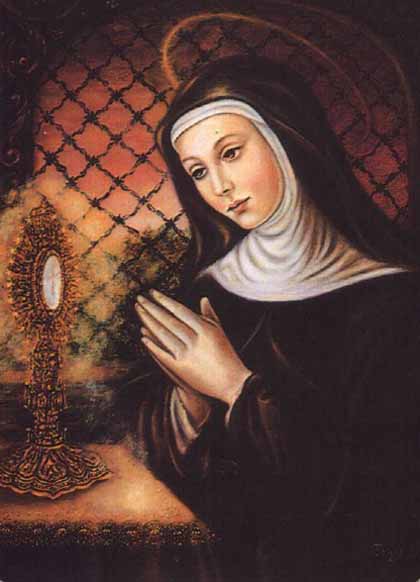
Rediscovering the Saints - St. Clare of Assisi

Back to the weekly, aimed at the discovery of our beloved saints! Today, the day dedicated to women, rediscover the story of a holy woman who has stood out for his strong faith that has made it similar to Blessed Francis of Assisi with whom he shared the path of love and faith, she is known as St. Clare of Assisi .
Following the usual biographical section, we reflect his will:


the evening of Palm Sunday (1211 or 1212) a beautiful eighteen year old girl runs away from his home in Assisi and runs to the Porziuncola, where Francis and expect the group children of his brothers. Make them wear a robe of a penitent, to cut their hair and then hospitalized in the next two Benedictine monasteries in Bastia and Sant'Angelo.
finally declared his dwelling in the small outhouse the church of San Damiano, which was restored by Francis. Here is Clare's sister Agnes was reached, then the other, Beatrice, and groups of girls and women will soon be fifty.
So begins, under the influence of Francis of Assisi, the adventure of Clare, daughter of nobles who oppose by force its way of life, but in vain. Indeed, after a few years she will go with her mother, Ortolan. However, not clear-and-run by the nuns to go, "or to enter into a community known and established. Fascinated by the preaching and example of Francis, the girl wants to create a family of poor cloistered radically as individual and as a monastery, living in their work and some help the Friars Minor, immersed in prayer for himself and for others, for everyone, for all concerned. Popularly known as "Damian" and Francis "Poor Women", will then be forever known as "Clarisse."
From Francis, she gets a first rule based on poverty. Francis advised, inspired Francis always, even unto death (1226), but she is a hero for his part, although it will make them hard to accept the post of abbess. In a way, it promises to be the strong woman that her initiative and the next century will develop in the Church.
Cardinal Ugolino, Bishop of Ostia, and protector of the Child, gives a new rule that reduces poverty, but she does not accept discounts as Ugolino, who became Pope Gregory IX (1227-41) grants the "privilege of poverty", later confirmed by Innocent IV with a solemn bull of 1253, presented to Clare a few days before death. Austerity
forever. But "we do not have a body made of bronze, nor is the robustness of our Granite". So says one of the letters (in modern translation here) to Agnes of Prague, the daughter of the King of Bohemia, severe abbess of a Franciscan monastery inspired ideal. Chiara
sends her affectionate advice and explicit: "I beg you to moderate with wise discretion in austerity and almost impossible to exaggerate, in which I learned that you've started. "Chiara Agnese should know how to make sick sister services also the most humble and unpleasant, without losing his smile and do not lose. Just two years after death, Pope Alexander IV proclaims a saint.
Clare was known for devotion to the Eucharist. Twice Assisi was threatened by the army of Emperor Frederick II, who counted among his soldiers, even the Saracens. Clare, in that sick time, was brought to the city walls holding the ciborium containing the Blessed Sacrament: his biographers say that the army, at the sight, they said to flee.


Author: Dominic Agassi


TESTAMENT

[2823] 1 In the name of the Lord (Col 3:17). Amen.

2 Among other benefits, we have received and every day we receive from our benefactor, the Father of mercies (2 Cor 1:3), for which we are required to make him glorious live offerings, 3 is great of our vocation. And the more it is great and perfect, so we are more obliged to him. 4 Therefore, the Apostle warns: "Know your calling (1 Cor 1:26)" \\ rref Know your vocation.

[2824] 5 The Son of God made our way (cf. Jn 14 , 16), and this by word and example (cf. 1 Tim 4:12) and taught us our blessed father Francis, a true lover and follower of him.

[2825] 6 We must, therefore, dear sisters, meditate the immense benefits that God has filled, 7 especially those whom he deigned to work with us through His beloved servant, our blessed father Francis, 8, and not only after our conversion, but since we were still between the vanities of the century.

[2826] 9 While in fact, the same saint, who had neither brothers nor his companions, almost immediately after his conversion, 10 was intent on repairing the church of San Damiano, where receiving the visit of the Lord in which he was intoxicated heavenly consolation, 11 felt the final push to abandon the whole world, in a transport of great joy and enlightened by the Holy Spirit, prophesied concerning us that after the Lord has made.

[2827] 12 climbed over the wall of that church, so it then shouted, aloud and in French, pointing to some poor people who were below them: 13 "Come and help me in this work of the monastery San Damiano, 14 to live there because soon there will be women, and for fame and sanctity of their lives give glory to our heavenly Father (cf. Mt 5.16) in all its holy Church "\\ rref Come and help me in this work of the monastery of San Damiano, 14 to live there because soon there will be women, and for fame and sanctity of their lives give glory to our heavenly Father in all his holy Church.

[2828] 15 We can thus see that in fact the great goodness of God towards us: 16 He has deigned, in his abundant mercy and love, to inspire such words to her about our Holy calling and election (cf. 2 Pt 1:10). 17 Not only us, however, our most holy father foretold these things, but all the others that would follow this holy vocation, to which the Lord has called us.

18 By how much and how availability urges application of mind and body so we have to perform the commandments of God and our Father Francis, because, with God's help, we can give back to him multiplied, the talents (cf. Mt 25.15-23) received!

[2829] 19 In fact, even the Lord has placed us as a model, for example and not only for other men, but also for our sisters, the ones that the Lord Himself called to follow our vocation, 20 so that they too will shine like a mirror and example to all who live in the world.

[2830] 21 Avendoci So he selected for a task so high, what is this, that they can mirror us in all those calls to be example and others, 22 we are extremely obliged to bless and praise the Lord and to grow every day more for the good. 23 Therefore, if we live according to the aforementioned form of life, we will leave a noble example to the other (see 2Mac 6,28.31), and through a labor of very short duration, we gain the pallium (Phil. 3:14) of eternal happiness .

[2831] 24 After the top was heavenly Father saw fit, for his mercy and grace, to enlighten my heart because they begin to do penance, following the example and instruction of our most blessed father Francis , 25 poco tempo dopo la sua conversione, io, assieme alle poche sorelle che il Signore mi aveva donate poco tempo dopo la mia conversione, liberamente gli promisi obbedienza, 26 conforme alla ispirazione che il Signore ci aveva comunicata attraverso la lodevole vita e l'insegnamento di lui. 

[2832] 27 Il beato Francesco poi, costatando che, nonostante la debolezza e fragilità del nostro corpo, non avevamo indietreggiato davanti a nessuna penuria, povertà, fatica e tribolazione, né ignominia o disprezzo del mondo, 28 che, anzi, sull'esempio dei santi e dei suoi frati, tutto ciò stimavamo sommo diletto - cosa questa che lui stesso ed i suoi frati avevano potuto verificare più volte -, molto se ne rallegrò in the Lord.

[2833] 29 Therefore, moved by a sense of fatherly love toward us, forced himself and his religion have always diligent care and special care of us, so that his brothers .

[2834] 30 And so, for the Lord's will and our most blessed father Francis, came to live next to the church of San Damiano. 31 Here, in a short time the Lord for His mercy and grace, we multiplied greatly, it might be fulfilled what he had foretold by the mouth of his Holy. 32 Before, in fact, we had stayed, but only briefly, in another place.

[2835] 33 Later he wrote for us a way of life, and principally who persevere in the holy poverty. 34 Neither contented himself during his earthly life, to stimulate with many exhortations and example to love and observance of holy poverty, but also left us many teachings written so that, after his death, we do not turn away any to it, 35 because even the Son of God, while living on earth, never wanted to get away from this holy poverty.

[2836] 34 Neither contented himself during his earthly life, to stimulate with many exhortations (See . Acts 20:2) and by his example to love and observance of holy poverty, but also left us many teachings written so that, after his death, not in any way we left it, 35 because even the Son of God, while living on earth, never wanted to get away from this holy poverty.

[ 2837] 36 And our most blessed father Francis, following in his footsteps (cf. 1 Pt 2:21), he chose for himself and his brothers this holy poverty of the Son of God, nor ever, while he lived, he withdrew into any way, neither by word nor with life.

[2838] 37 And I, Clare, I am, though unworthy, the servant of Christ and of the Poor Clares of the Monastery of San Damiano and seedling del padre santo, poiché meditavo, assieme alle mie sorelle, la nostra altissima professione e la volontà di un tale padre, 38 ed anche la fragilità delle altre che sarebbero venute dopo di noi, temendone già per noi stesse dopo la morte del santo padre nostro Francesco - che ci era colonna e nostra unica consolazione dopo Dio e sostegno (Cfr. 1Tm 3,15) -, 39 perciò più e più volte liberamente ci siamo obbligate alla signora nostra, la santissima povertà, perché, dopo la mia morte, le sorelle che sono con noi e quelle che verranno in seguito abbiano la forza di non allontanarsi mai da essa in nessuna maniera. 

[2839] 40 E come io sono stata sempre diligente e sollecita nell'osservare I myself, and do observe the holy poverty, we promise to the Lord and our holy father Francis, 41 so the sisters who happen to me in this office, are obliged to respect and observe it from the other until the end.

[2840] 42 But again, for safety reasons, I bother to appeal to Mr. Innocent, during the reign of which started the Order, and to his successors, because they confirm and corroborate with the papal privileges, Our occupation of holy poverty, which promises to our blessed father, 43 May they never, at any time we walked away from it.

[2841] 44 Which, by bending your knees and bowing deeply, body and soul, in the charge of the holy mother the Roman Church, the Supreme Pontiff, and especially to Cardinal will be deputy to the Religion of Friars Minor and ours, all my sisters, present and those to come, 45 because, for the sake of that Lord, that poor man at his birth he was placed in a manger (Luke 2:12), lived in poverty on the ground and stood naked on the cross, 46 care should be taken to enforce that his little flock (cf. Lk 12:32) - why the high Father, by word and example of our blessed father Francis, the father of his Church, to imitate his poverty and humility of his beloved Son and his glorious Virgin Mother -, 47 holy poverty, that God and our blessed Father Francis we promise, and still worthy of fervor and keep the sisters in such poverty.

[2842] 48 Furthermore, as the Lord gave us our most blessed father Francis as the founder, and support our planter in the service of Christ and the things we promised to God and that our father, 49, and he lived until , was always considerate care to farm and grow us, its plant, by word and deed of his; 50 so I commend my sisters, present and the future successor of our blessed Father Francis and all the friars of his Order, 51 because there are helpful to move increasingly into the well in the service of God and especially to observe the holy poverty better.

[2843] 52 And if it were to happen at some time, that those sisters leave the monastery of San Damiano and moved elsewhere, are nevertheless required, wherever they lived after my death, to observe the same form of poverty, we promise to God and our most blessed father Francis.

[2844] 53 However, the one who will be in the office [ Abbess of] what the other sisters, they always care and precaution to avoid buying or accepting land around the monastery aforesaid, if not in the quantity demanded that the extreme need of a garden for growing of vegetables. 54 If we were to take some time, for a proper isolation of the monastery, to have some 'of land outside the fence of the garden, do not permit purchase of more than require the extreme necessity, and 55 then that land is not worked or sown, but will always remain uncultivated and Inara.

[2845] 56 I admonish and exhort in the Lord Jesus Christ all the sisters, present and future, that they strive always to imitate the way of holy simplicity, humility and poverty, and even the honesty of this holy life, 57 which we were taught by our blessed Father Francis from the beginning of our conversion to Christ.

[2846] Using 58 of these virtues, and not for our merits, but only for the mercy and grace of the Father, Giver of Mercy (see 2 Corinthians 1:3); always pour forth the aroma (see 2 Cor 2:15) of their good reputation on those that are far, how about those who are close.

[2847] 59 And loving each other in Christ's love, love you have in your hearts be shown outside the works (cf. James 2:18), 60 so that the sisters, by such an example, continues to grow in the love of God and in charity.

[2848] 61 Still I pray that she will the Government of the sisters, who studies other than to preside over the virtues and the sanctity of life, for dignity, for 62, inspired by her example, her sisters pay obedience, not so much for the office he occupies, but for love. 63 Whether it is also fair to provident and her sisters, as a good mother to her daughters, 64 and especially studies is to provide for each in its needs with those alms which the Lord will send. 65 is still so friendly and affordable for all, that the sisters can express their needs confidently 66 and use her at any time with confidence, as they believe best for themselves or for the benefit of the sisters.

[2849] 67 The sisters then, that subject, remember that it is love for the Lord who have renounced their own will. 68 So I want to obey their mother, as voluntarily promised to God, 69 that their mother, looking at the charity, I'umiltà and the union that reigns among them, are lighter weight which supports Office 70 and, on their holy lives, what is troublesome and turned bitter for her sweetness.

[2850] However, since 71 is the narrow way and the path and narrow is the gate through which one walks and enter into life, few are those who travel and there (cf. Mt 7:14) entering, 72, and if Yet there are those who for a little while you walk, few persist in it. 73 Blessed are those, however, are allowed to walk this way and persevere to the end (cf. Ps 118.1 and Mt 10:22)!

[2851] 74 And so we, who are in the way of revenue Lord, let us not give up ever, to our fault or negligence or ignorance. 75 will go to insult so great Sir, to his Virgin Mother, to our Blessed Father Francis, to the whole Church triumphant, and also to the Church here on earth. 76 It is written, in fact: Damn those who stray from your commands (Psalm 118.21).

[2852] 77 For this reason, io piego le mie ginocchia davanti al Padre del Signore nostro Gesù Cristo (Ef 3,14), affinché, per i meriti della gloriosa santa Vergine Maria sua Madre, del beatissimo padre nostro Francesco e di tutti i santi, 78 lo stesso Signore, che ci ha donato di bene incominciare (Cfr. 2Cor 8,6.11), ci doni ancora di crescere (Cfr. 1Cor 3,6.7) nel bene e di perseverarvi fino alla fine. Amen. 

[2853] 79 Questo scritto, perché sia meglio osservato, io lascio a voi, sorelle mie amatissime e carissime, presenti e future, in segno della benedizione del Signore, del beatissimo padre nostro Francesco e della benedizione della vostra madre e serva.